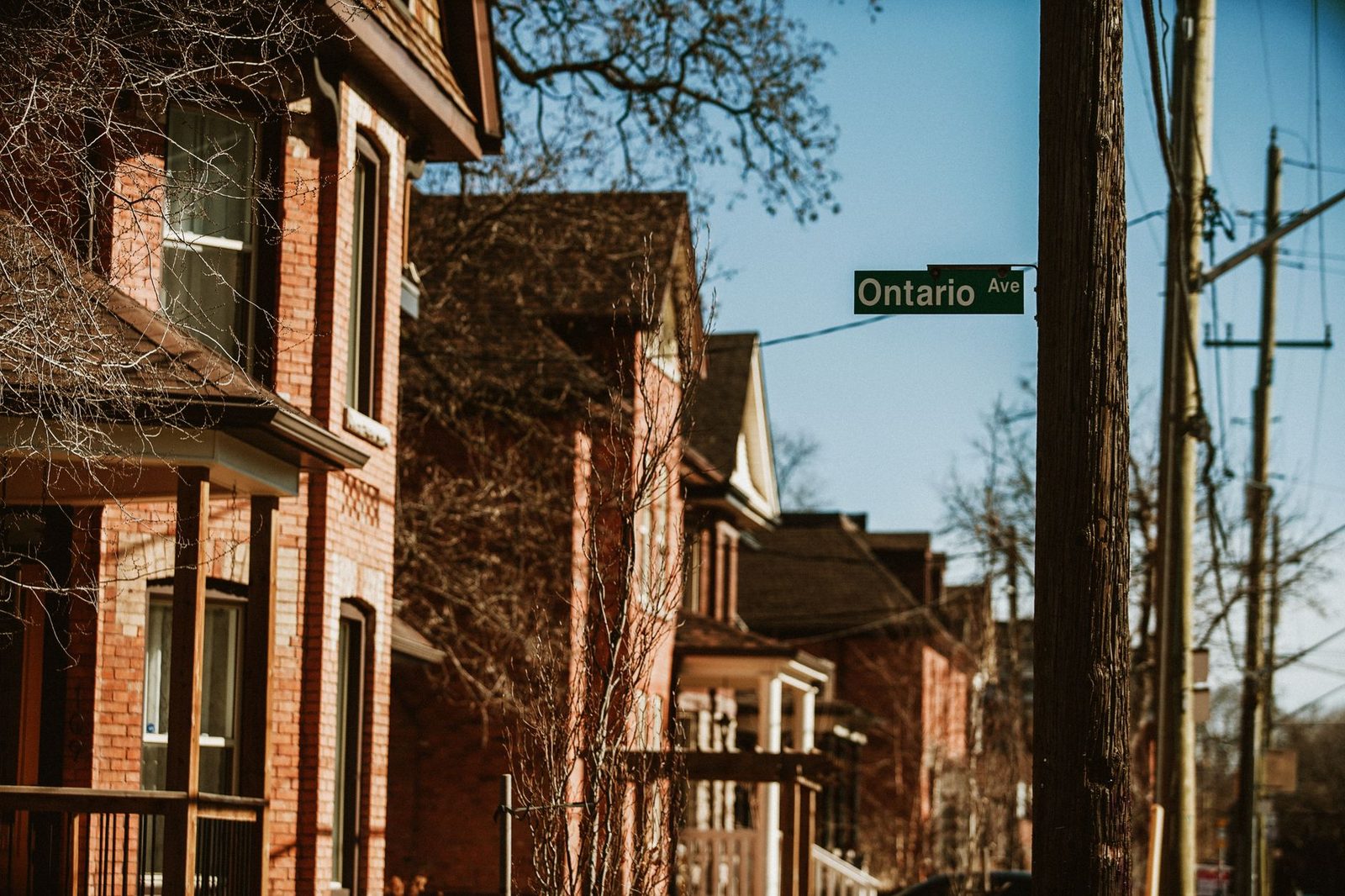
Every time the Bank of Canada meets, I get a version of the same question from buyers eyeing Richmond Hill: should I wait and see what happens with rates before I commit to a neighbourhood like Bayview Hill. Reuters and Bloomberg are both reporting this week that the Bank is likely to hike for the first time in more than three years, with National Bank economists Taylor Schleich and Ethan Currie pointing to oil-driven inflation as the reason. That is a real decision for the overall rate path. It is not a reason to rethink Bayview Hill.
Neighbourhoods like this one are chosen for reasons that outlast a single rate announcement. Let me walk you through what I actually see when I'm there with clients.
The streets and the housing stock
Bayview Hill sits east of Bayview Avenue, north of the 407, in a pocket that was master-planned in the late 1980s and early 1990s around curving streets, mature trees, and generous setbacks. Walk Bayview Hill Drive or Rouge Hill Court and you'll notice the lots are wide by Richmond Hill standards, many with pie shapes or extra depth toward the ravine systems that thread through the community.
The housing stock skews toward large two-storey homes built with a certain formality: centre hall plans, principal rooms sized for entertaining, finished lower levels that are genuinely usable rather than afterthoughts. Some owners have updated kitchens and primary suites over the years; others have held the original finishes. Either way, the bones tend to be solid, because builders here were working with room to spare rather than squeezing houses onto narrow lots.
This is also a community where a thoughtful renovation can outperform a full rebuild, depending on the specific lot and structure. If you're weighing that decision anywhere in the GTA, the framework I use is the same one I laid out in Tear Down and Rebuild, or Renovate? The Real Decision Behind the Trend.
Who chooses Bayview Hill, and why
The families I work with here tend to be planning for the long term. They're often moving from a smaller home elsewhere in Richmond Hill or from North York, drawn by the combination of school catchment, ravine proximity, and a street feel that is quieter than the arterial roads suggest from the outside.
Commuters appreciate the access to Highway 404 and the 407, along with GO service nearby, which matters for households where one or both parents are still working downtown a few days a week. Bayview Hill Public School and the broader catchment are a significant draw, though I'll say what I always say: visit in person, talk to current families, and judge fit for your own kids rather than leaning on any ranking. We're not going to use a number here that nobody can verify, and you shouldn't either when you're making a decision this size.
What a buyer should look at closely
A few things I check every time I walk a Bayview Hill property with a client:
- Ravine and lot grading. Several streets back onto or near environmentally protected areas. Confirm what you can and cannot do with the rear yard before you fall in love with the view.
- Age of major systems. Many homes here are original to the late 1980s or 1990s build wave. Roof, furnace, and windows are worth a close look even when the kitchen has been redone.
- Basement finishing and permits. Lower levels are often finished to a high standard, but confirm permits were pulled, especially if there's a secondary suite or walkout.
- Street-by-street variation. Proximity to Bayview Avenue itself versus the interior loops changes the noise profile and resale pool meaningfully. Walk it at different times of day.
- Comparable sales with real similarity. Lot shape and tree coverage vary enough here that a straight price-per-square-foot comparison across streets can mislead you.
If you're structuring a condition period around any of this, the approach I use for inspections at this price point is in Structuring Your Home Inspection Condition at the $3M+ Level.
How the seller's side reads the same streets
Sellers in Bayview Hill are usually long-term owners, often the original family or the first resale, which means these homes don't come to market often. That scarcity works in a seller's favour, but it also means presentation matters more, not less, because the buyer pool is comparing a handful of distinct homes rather than a dozen near-identical listings.
The sellers who do best here are the ones who treat the ravine lot, the mature landscaping, and the formal layout as the story, rather than trying to make the home feel like something it isn't. A 1990s centre hall colonial with a genuinely private backyard doesn't need to pretend to be a modern open-concept build. It needs to be shown as exactly what it is, well maintained and thoughtfully staged.
What this means for you
If you're watching this week's Bank of Canada decision and wondering whether to pause a Bayview Hill search, separate the two questions. The rate path affects your mortgage structure and your monthly carrying cost. It does not change the lot sizes, the school catchment, the ravine access, or the quiet of Rouge Hill Court. Those fundamentals are why families choose this neighbourhood in the first place, and they were true before this week's headline and will still be true after it.
What changes with a rate move is how you structure the financing, not whether the street is worth buying into. If you want to think through the financing side specifically, I've written about that in the context of a previous Bank of Canada decision in Decision Day: How to Read the Bank of Canada as a Luxury Buyer.
Are you weighing a Bayview Hill purchase against the rate news this week, or trying to figure out if a specific street fits your family the way you're hoping it will? Jai, with The Agency, Toronto, works with buyers, sellers, and custom-build clients across the GTA and is glad to have a ten-minute conversation about your own situation, offered as a courtesy, never a pitch.