Walk enough $3-million homes and you start sorting features into two piles: the ones buyers pay for again at resale, and the ones that photograph well but return nothing. With custom building costs where they are, knowing the difference is worth six figures.
The features that keep paying
Radiant floor heating leads the list. It is invisible in photographs and unforgettable in person, which is exactly the profile of a feature that holds value: buyers experience it at the showing, in bathrooms especially, and remember your home as the comfortable one. Heated driveways and snowmelt systems belong to the same family. In a climate that delivers real winters, a driveway that clears itself reads as genuine luxury rather than decoration, and it protects the hardscaping investment beneath it.
Integrated smart-home infrastructure, done properly, has crossed from novelty to expectation at the top end. The key word is infrastructure: wiring, lighting design, and automation planned during construction. Retrofitted gadgetry impresses no one; a home that dims, warms, and secures itself coherently quietly raises every showing.
Quality glazing is the sleeper. Floor-to-ceiling windows, and the tilt-and-turn European systems appearing in the better new builds, transform light and sound in ways buyers feel within seconds of entering. Light is the one finish every buyer can evaluate without expertise.
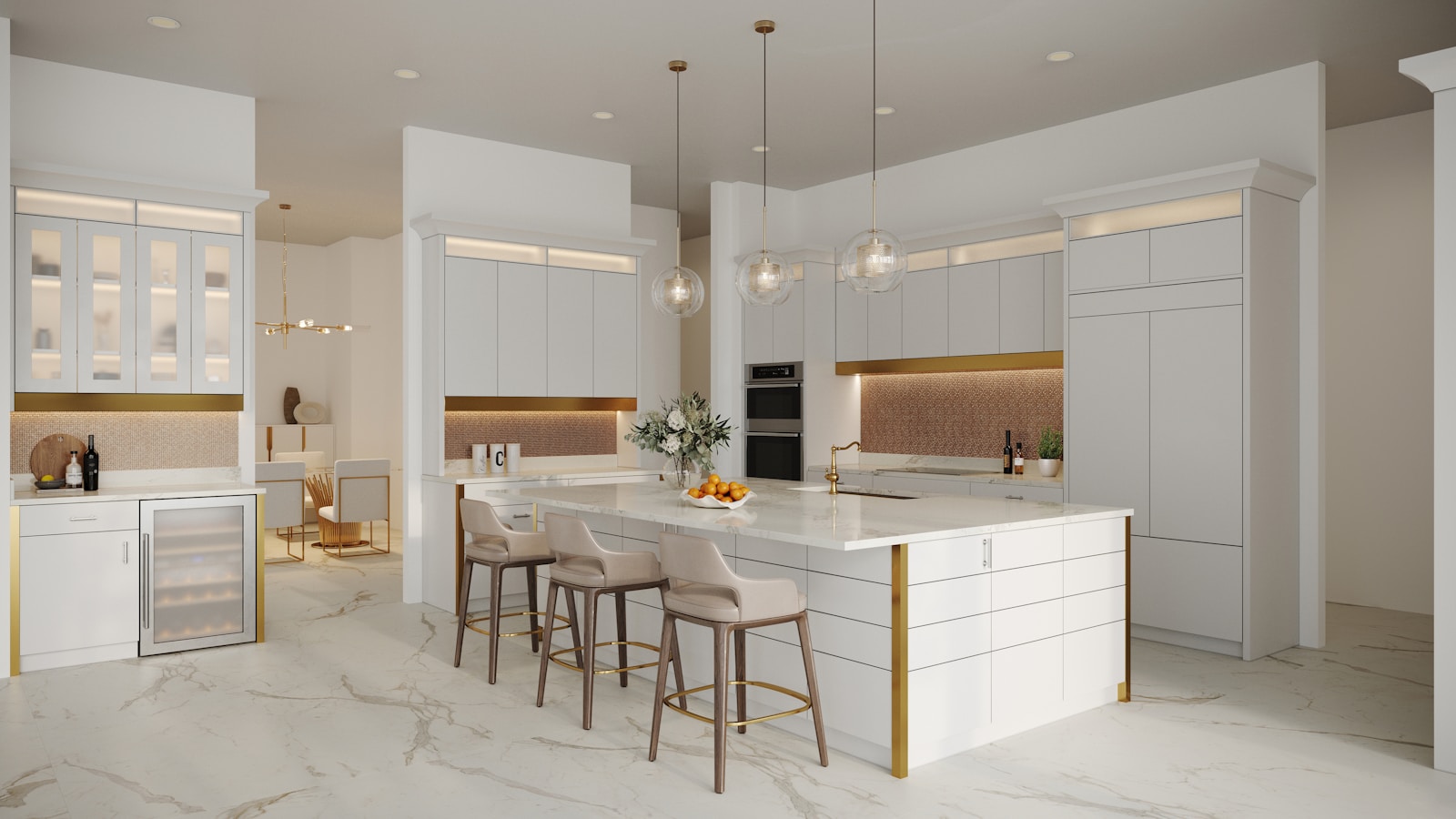
And the perennial: the kitchen as architecture rather than cabinetry. Full-slab surfaces, integrated appliances of recognized calibre, and a layout that anticipates how families actually gather. Kitchens carry disproportionate weight because buyers decide in that room what the rest of the house must be like.
The expensive theatre
Some features sell the dream at the showing but vanish from the resale math. Highly personal wine displays sized far beyond most collections. Home theatres built as dedicated single-purpose rooms, which younger luxury buyers increasingly ask to convert. Outdoor kitchens specified for a climate five months kinder than ours. None of these are mistakes if you will genuinely use them; all of them are mistakes if installed for an imagined future buyer.
The pattern behind the theatre pile: features that impose the current owner's lifestyle rather than enabling the next owner's.
The test I give clients
Before any major upgrade, two questions. Will you personally use it weekly for as long as you own the home? And does it improve one of the fundamentals buyers always pay for: light, warmth, quiet, storage, or flow? Two yeses, proceed happily. One yes, proceed knowingly. Two noes, and you are buying theatre; enjoy the show, but do not book it as an investment.
Where this lands for owners and builders
If you are building custom, weight the budget toward the invisible fundamentals early, because they cannot be retrofitted at any sane cost. If you are upgrading an existing home ahead of a sale, spend where showings are won: light, kitchens, and the sensory comfort buyers remember. And if you are choosing between two finished homes, the one with better bones beneath the finishes is nearly always the better buy.
I walk clients through exactly these trade-offs on real properties every week. If you are weighing an upgrade, a build specification, or two competing homes, I am glad to bring that walkthrough judgment to your decision.